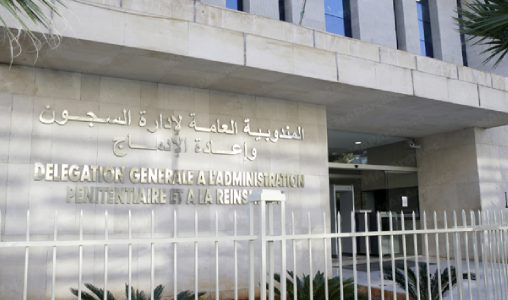
General Delegation for Prison Administration and Reintegration has announced the first results of Morocco’s alternative sentencing reform, highlighting growing use of non-custodial penalties as part of the Kingdom’s broader efforts to modernize its criminal justice system and promote inmate reintegration.
According to the prison administration authority’s 2025 activity report, the initial implementation phase of the law — covering the period between August and December — recorded increasing judicial reliance on alternative penalties designed to reduce prison overcrowding while encouraging rehabilitation measures outside traditional detention facilities.
The report revealed that 1,001 court rulings involving alternative sentences were transmitted to prison institutions during the period, corresponding to a total of 1,077 alternative penalties. Authorities also issued 743 enforcement decisions, including 727 involving detained individuals.
Among the cases reviewed, 606 inmates were released under alternative sentencing measures, while 16 decisions concerned defendants prosecuted while remaining at liberty.
The DGAPR also highlighted the rollout of a digital information management system for alternative penalties known as “SIGPA,” developed to centralize data and improve monitoring of sentence implementation through a unified digital platform.
Beyond the sentencing reform, the authority’s annual report provided a broader overview of developments within Morocco’s prison and reintegration system throughout 2025, including prison population trends, healthcare services, vocational training programs, prison modernization projects and the digital transformation of correctional administration.
The 163-page report additionally documented institutional activities carried out during the year through statistical analyses, maps, charts and photographic documentation, reflecting Morocco’s ongoing efforts to modernize governance within the penitentiary sector.