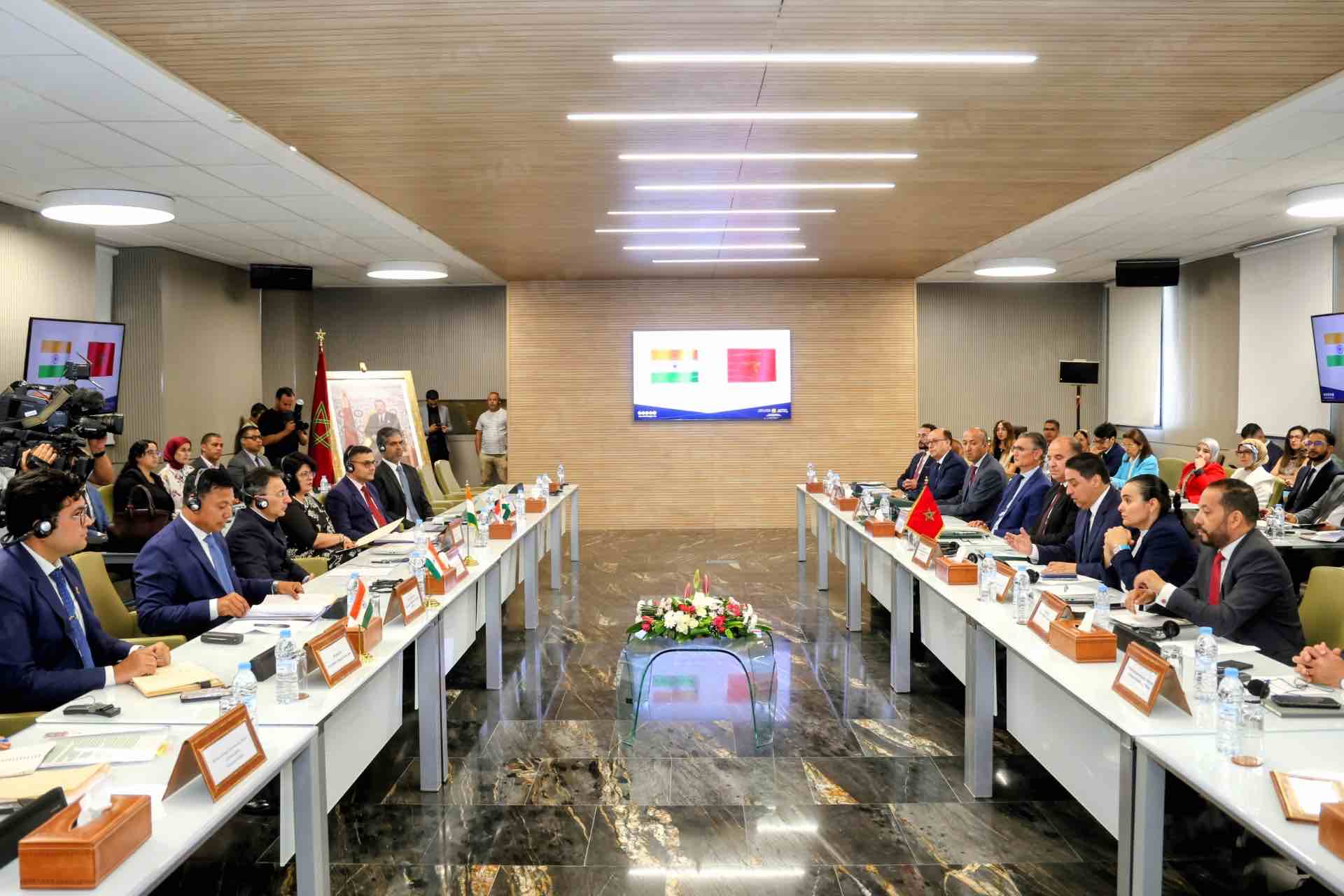
Morocco and India are looking to deepen their economic relationship, with both sides pushing for greater trade, investment and industrial cooperation. The seventh session of the Morocco-India Joint Commission, held Monday in Rabat, placed particular emphasis on expanding bilateral commerce and opening new areas for partnership.
Secretary of State for Foreign Trade Omar Hejira said the meeting marked a new stage in relations between the two countries, highlighting Morocco’s strategy of strengthening partnerships with Asian economies and diversifying its international economic ties.
Morocco and India established diplomatic relations in 1993, while bilateral ties have gained further momentum since the visit of **His Majesty King Mohammed VI to India in 2015**. Rabat now sees the relationship as having the potential to develop into a broader strategic partnership covering several sectors.
Trade is already a major component of the relationship. According to Indian Minister of State for Commerce and Industry and Electronics and Information Technology Jitin Prasada, bilateral trade reached around $4 billion during 2025-2026. Indian exports to Morocco stood at nearly $1.6 billion, while Moroccan exports to India reached approximately $2.89 billion.
New Delhi is now proposing to double bilateral trade over the next five years. Prasada also called for diversifying trade flows, addressing non-tariff barriers and making it easier for companies from both countries to access each other’s markets.
Among the proposals discussed was the creation of a joint working group dedicated to bilateral trade. The mechanism would be tasked with strengthening business links, identifying new commercial opportunities and examining the possibility of a preferential trade agreement between Morocco and India.
Industrial cooperation is another area where both countries see significant potential. The Indian side highlighted the automotive industry, electric vehicles and renewable energy, while also calling for stronger cooperation in fertilizers and the development of joint investment projects.
Indian companies could also play a greater role in Morocco’s infrastructure development, particularly in roads, railways, energy, water and digital connectivity. The emphasis on private-sector involvement reflects an effort to move bilateral relations beyond trade toward investment and joint ventures.
The two countries are therefore seeking to broaden the economic foundations of their partnership, with Morocco positioning itself as a gateway to African and European markets while India continues to expand its industrial and commercial presence internationally.
Prasada also invited a high-level Moroccan delegation to the 2026 Partnership Summit, scheduled to take place on November 12 and 13 in Visakhapatnam, providing another opportunity to advance business and investment projects between the two countries.