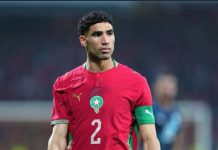
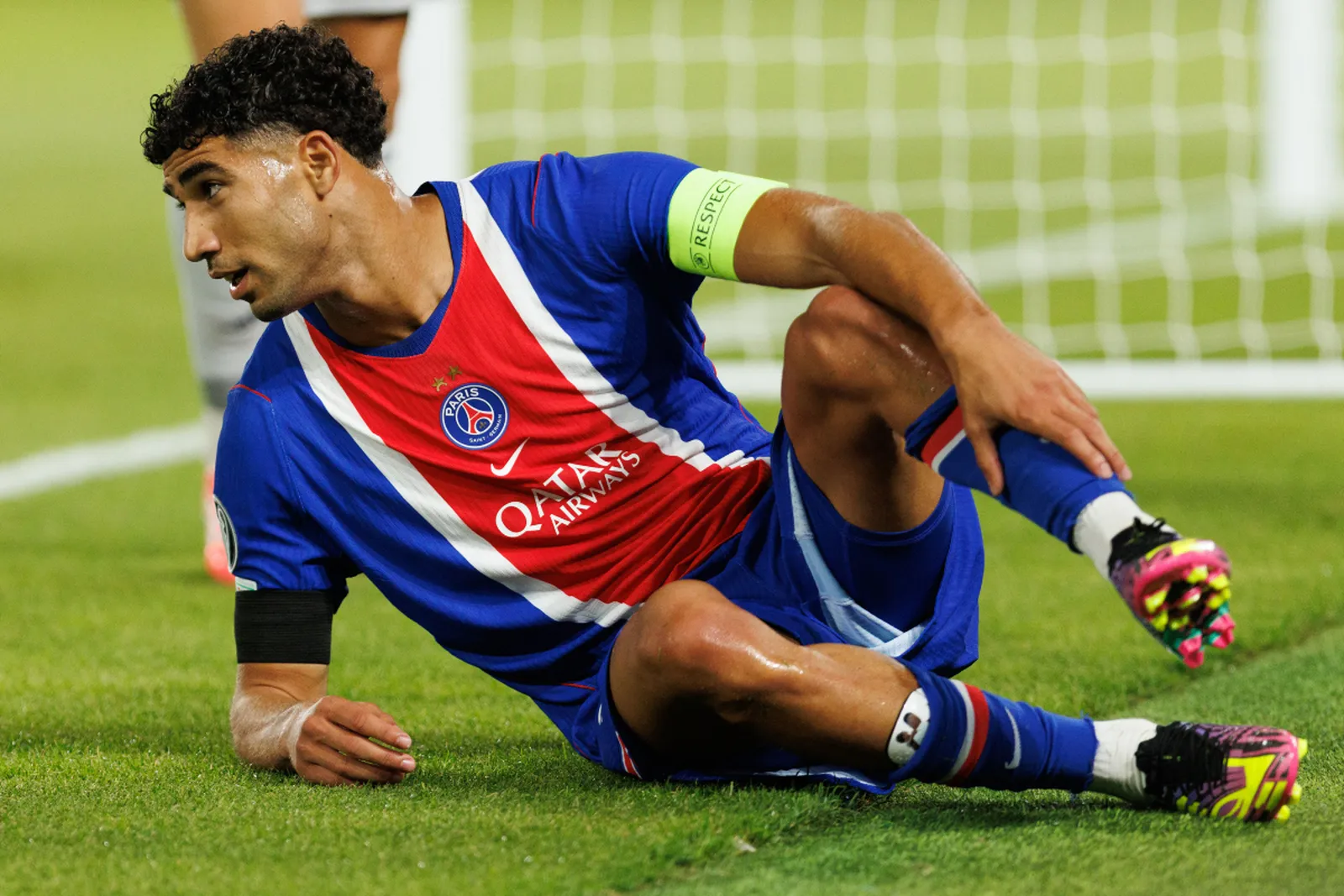
Hakimi’s latest setback comes at a delicate moment for both Paris Saint-Germain and Morocco. The defender was unable to finish PSG’s 1-0 win away to Brest on Sunday, leaving the pitch in the 39th minute after attempting to continue despite discomfort. PSG coach Luis Enrique later indicated that the player was suffering from an adductor issue, with the severity still unknown pending further examinations.
The timing is particularly concerning. PSG are preparing for a major Ligue 1 clash against Marseille next weekend, while Morocco are approaching an important international window at the end of September.
Hakimi’s physical record from last season adds another layer to the concern. The Moroccan international missed 22 matches in the 2025-2026 campaign because of injuries. Seventeen of those absences followed a serious ankle sprain suffered in November, while another five games were missed because of a thigh problem later in the season.
That history does not necessarily point to a recurring muscular weakness. The ankle injury, in particular, resulted from contact rather than an underlying physical problem. However, the sheer number of matches played by Hakimi over the past year has inevitably raised questions about how much strain the 27-year-old has been carrying.
His schedule has been exceptionally demanding. Hakimi had to race against time to recover in order to feature for Morocco at the Africa Cup of Nations, before another intense period involving PSG’s Champions League campaign and the FIFA World Cup.
There are also signs that his influence has fluctuated compared with his outstanding 2024-2025 season. Hakimi continues to produce the explosive runs that have become one of his trademarks, but his impact in the final third has been less consistent. According to figures cited by L’Équipe, he has been involved in a decisive action every 335 minutes in 2026, compared with every 194 minutes in 2025.
Those numbers should nevertheless be viewed with caution. Changes in the players around him on PSG’s right flank have also altered his usual combinations and attacking patterns.
For PSG, Hakimi’s importance is difficult to overstate. The club does not have a natural replacement capable of reproducing the full range of his attacking qualities. Warren Zaïre-Emery can cover the position when required, but replacing Hakimi’s pace, movement and ability to influence matches from the right remains a difficult task.
The situation is equally significant for Morocco. The Atlas Lions are due to begin their 2027 Africa Cup of Nations qualifying campaign against Gabon on September 25 and Lesotho on September 29, before facing high-profile friendly opponents in early October.
There is currently no indication that Hakimi will miss those fixtures. Everything will depend on the results of his medical examinations and the recovery period that follows.
The latest injury scare therefore raises a broader issue rather than simply signaling another setback. Hakimi remains one of the most influential players for both PSG and Morocco, but after a season punctuated by two lengthy injury absences, managing his workload could become just as important as maximizing his minutes.
For a player accustomed to playing almost without pause, the challenge may now be finding the right balance between staying on the pitch and allowing his body enough time to recover.