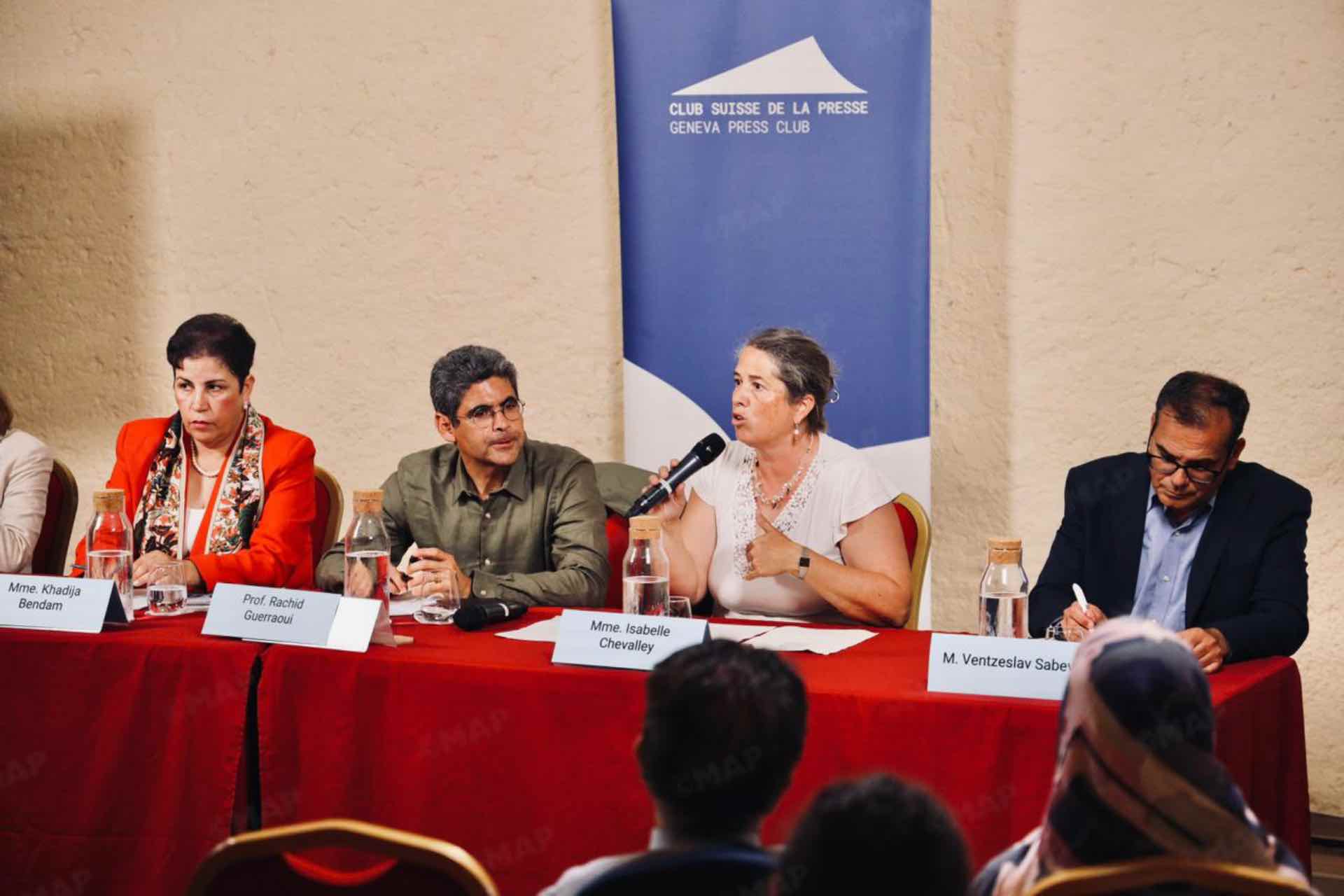
Morocco’s energy transition strategy was presented as a leading regional model during an international conference held in Geneva, where policymakers, researchers and civil society representatives called for placing human rights at the heart of future energy policies.
The event, organized alongside the 62nd session of the United Nations Human Rights Council, focused on how access to clean, affordable and sustainable energy can contribute to social justice, economic development and the right to development, particularly across North Africa.
Throughout the discussions, Morocco was repeatedly cited as an example of how long-term investment in renewable energy and governance reforms can accelerate sustainable growth while strengthening national resilience.
Professor Rachid Guerraoui of the Swiss Federal Institute of Technology Lausanne (EPFL) argued that artificial intelligence is becoming an essential component of modern development. He stressed that expanding access to AI requires reliable and sustainable energy systems, while encouraging the development of energy-efficient technologies and broader access to open-source AI to reduce technological inequalities between developed and developing nations.
Isabelle Chevalley, founder of Éco-LIT, emphasized that access to sufficient energy should be regarded as a fundamental right. She noted that rapid advances in solar and wind technologies are creating new opportunities for affordable energy production, particularly across the African continent.
Khadija Bendam, President of the International Nuclear Societies Council (INSC), highlighted Morocco’s achievements since the launch of its National Energy Strategy in 2009. She noted that renewable sources now account for more than 45% of the Kingdom’s installed electricity generation capacity, with the national objective of reaching 52% by 2030.
According to Bendam, Morocco’s energy investments have supported industrial development, job creation and the emergence of strategic sectors such as green hydrogen. She also stressed that infrastructure alone cannot ensure a successful transition, calling for greater investment in education, scientific research, innovation and the inclusion of women and young people in the transformation process.
The conference brought together representatives of international organizations, academic institutions and non-governmental organizations, reflecting growing international interest in the relationship between energy transition, good governance and human rights as key pillars of sustainable development. Morocco’s experience was presented as evidence that ambitious energy policies can simultaneously strengthen economic competitiveness, environmental sustainability and social inclusion.