
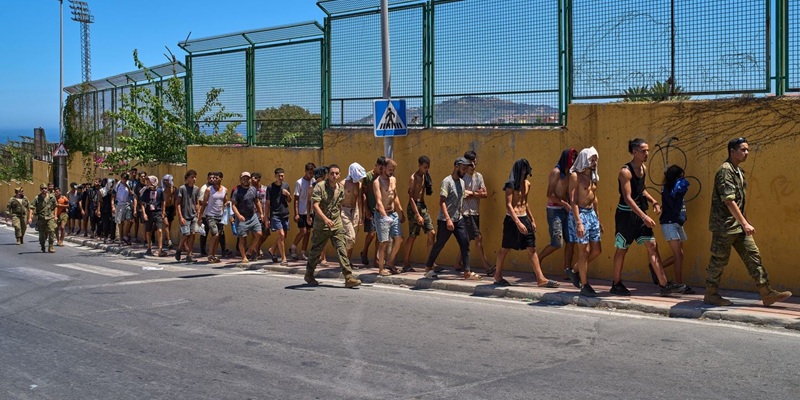
Morocco has argued that the recent migration surge toward the Spanish enclave of Ceuta was triggered by a Spanish court ruling rather than shortcomings in its own border security. Rabat says it warned Madrid in advance that the legal decision could encourage irregular migration and create new operational challenges along the shared frontier.
According to a senior Moroccan official, discussions between Moroccan and Spanish authorities began several days before the crisis unfolded, after online networks started spreading information about a ruling by Spain’s Supreme Court concerning the immediate return of migrants arriving by sea. Moroccan officials say they alerted Spain that the decision could be misinterpreted and exploited by human trafficking networks.
The official believes the ruling helped fuel false expectations among thousands of potential migrants, encouraging them to attempt the crossing into Ceuta. In Rabat’s view, the events demonstrated the risks that Moroccan authorities had already highlighted during consultations with their Spanish counterparts.
Morocco also rejected claims that its security forces failed to protect the border. Officials argued that confronting such a large crowd solely through the use of force would have carried serious humanitarian consequences and would not have offered a sustainable solution to the situation.
The Moroccan government stressed that managing irregular migration cannot be the responsibility of one country alone. It pointed to the significant financial and human resources invested every year in border surveillance, anti-smuggling operations, and efforts to dismantle criminal trafficking networks that target vulnerable migrants.
Despite the tensions created by the events in Ceuta, Moroccan authorities emphasized that cooperation with Spain remains strong. Both countries continue to coordinate closely on migration management, security cooperation, and intelligence sharing to address common challenges along the western Mediterranean route.
The latest statements reflect Morocco’s broader position that irregular migration is a shared international challenge requiring coordinated responses. Rabat maintains that legal developments, misinformation spread by trafficking networks, and broader socio-economic pressures must all be considered when addressing migration flows between North Africa and Europe.