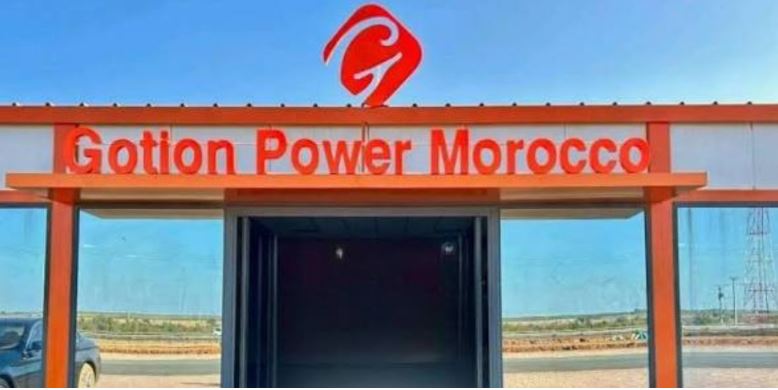
Gotion Power Morocco has completed the buildings and infrastructure for its battery cell factory in Kenitra just 13 months after construction began, marking a major milestone in Morocco’s ambition to become a strategic hub for electric mobility and energy storage.
The project, launched in September 2025 following earthworks, is now entering a new phase. Equipment commissioning and production start-up activities are scheduled to begin during the week of October 20, 2026. The initial phase is designed for a production capacity of 20 GWh, with lithium iron phosphate (LFP) battery cells intended for the automotive and energy storage industries.
The factory is expected to serve customers in Morocco and across Africa, while also targeting markets in Europe, the Middle East and the United States. Its development strengthens the Kingdom’s position in a global industry increasingly shaped by demand for electric vehicles, battery storage and more resilient supply chains.
The next stage will include construction and infrastructure work for a cathode production unit, an essential component in the battery manufacturing process. This expansion is expected to deepen the industrial integration of the Kenitra site and support the development of a broader battery value chain in Morocco.
Bringing the facility to this stage required a major logistics operation. Thousands of containers carrying production lines and advanced industrial equipment were shipped from China to Kenitra. Gotion Power Morocco credited the support of port and customs authorities, alongside the efforts of its teams and industrial partners, for helping manage the operation within the project’s demanding schedule.
The investment is also creating a base of local technical expertise. More than 400 Moroccan employees have been recruited so far, including engineers, technicians, production operators and support staff. Most received training at Gotion High-Tech facilities in China before continuing their preparation in Kenitra under the supervision of the group’s specialists.
This transfer of skills is a significant element of the project, as battery manufacturing requires specialised knowledge in industrial processes, equipment operation and quality control. The development of a trained Moroccan workforce could support further industrial expansion as production volumes increase.
Another important development came on September 28, 2026, when Volkswagen and Gotion High-Tech announced a joint venture in Kenitra focused on producing 100 kilotonnes of cathode materials. The partnership highlights the growing interest of major automotive industry players in Morocco’s manufacturing capabilities and its potential role in international battery supply chains.
For Morocco, the combination of battery cell production, cathode materials and technical training could help strengthen industrial links between automotive manufacturing and emerging clean-energy technologies. It also offers an opportunity to attract additional suppliers and specialised businesses around the Kenitra industrial ecosystem.
Khalid Qalam, Chairman of the Board of Gotion Power Morocco, praised the commitment of Moroccan and Chinese teams and the support provided by public authorities. He described the start-up of production equipment as an initial milestone in a project intended to contribute to Morocco’s industrial development and clean-energy ambitions.
With the first phase designed for 20 GWh of capacity, Gotion’s Kenitra project represents a significant step in the Kingdom’s efforts to build a stronger position in the global electric mobility sector. The next challenge will be to move from construction and equipment installation to stable industrial production, while progressively expanding local capabilities and integrating more of the battery value chain within Morocco.