Stellantis is testing a new way to charge electric vehicles in Morocco without relying on the electricity grid.
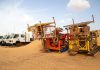
The automotive group has installed a solar-powered charging station at its Motor Village facility in Bouskoura as part of a one-year pilot project developed with Moroccan renewable-energy company Solar Power.
The system combines photovoltaic generation, battery storage and smart energy management in a compact installation designed to operate independently from the grid.
The project addresses one of the key challenges facing electric mobility: expanding charging infrastructure to locations where conventional grid connections may be difficult, expensive or unavailable.
The station can provide charging for electric vehicles, plug-in hybrid vehicles and smaller electric mobility solutions.
It has four AC charging points, with the vehicle chargers capable of delivering up to 19 kW.
Under the system’s operating configuration, the installation can provide daily charging capacity for up to three battery-electric vehicles or eight plug-in hybrid vehicles.
Solar production is combined with an integrated battery system so that excess electricity generated during periods of strong sunlight can be stored for later use.
The battery itself incorporates reused Stellantis micromobility batteries, adding an element of reuse and circular-economy principles to the project.
The station also includes two standard 230-volt electrical outlets for smaller mobility devices.
One example is the Fiat TRIS, which can be charged from 20% to 80% in around four hours using one of the integrated domestic outlets.
An intelligent energy-management system controls generation, storage and distribution. This allows the station to optimize available solar power while maintaining charging availability beyond daylight hours.
The Bouskoura installation is more than a technology demonstration. It represents the first commercial-oriented solar charging station deployed by Stellantis and Solar Power in Morocco and will serve as the starting point for the pilot phase.
The next 12 months will be used to assess real-world performance and gather feedback from users.
The partners are particularly interested in applications where an autonomous charging solution could provide an advantage. Potential locations include remote work sites, logistics platforms, hospitality facilities and rural communities.
Morocco’s strong solar potential makes the country a natural testing ground for such infrastructure. If the pilot confirms the technology’s viability, the concept could potentially be adapted for deployment in other areas where conventional charging infrastructure remains limited.
The project originated from a Stellantis engineer based in Morocco and was developed through Star*Up, the group’s internal entrepreneurship program.
The initiative illustrates how an employee-led idea can evolve into a commercial pilot addressing a practical challenge in the transition toward electric mobility.
For Stellantis, the experiment is therefore testing two things at once: a new charging model and the ability to turn local innovation into scalable solutions for the future of mobility.