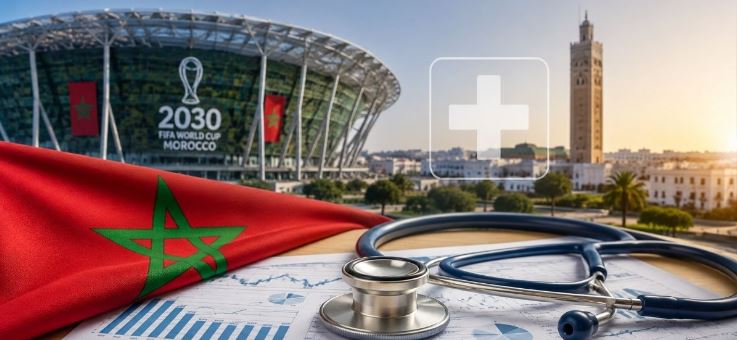
Morocco’s preparations for the 2030 FIFA World Cup are accelerating the country’s infrastructure transformation, but they are also prompting questions about how public resources are being allocated.
In its BTI 2026 Morocco Country Report, Germany’s Bertelsmann Stiftung recognizes the progress made by Morocco in infrastructure development and economic diversification. It highlights areas such as renewable energy and tourism while pointing to persistent challenges involving unemployment, inequality and purchasing power.
The report’s main concern centers on the balance between major infrastructure projects and social priorities. Large-scale investments, including high-speed rail infrastructure, require substantial resources at a time when sectors such as healthcare and education continue to face significant funding needs.
The 2030 World Cup adds another layer to this debate. Morocco will co-host the tournament with Spain and Portugal, an opportunity that could accelerate infrastructure development, attract investment and strengthen the country’s international profile.
However, the Bertelsmann Stiftung argues that spending on sports infrastructure should be assessed alongside broader social requirements. The key issue is whether the investments associated with the tournament will generate benefits that extend beyond stadiums and transport infrastructure.
Healthcare is particularly significant in this regard. Morocco is simultaneously pursuing a major reform of its health system, including the expansion of medical coverage, the rollout of territorial health groups, hospital modernization and efforts to strengthen human resources.
These reforms require sustained investment. The report therefore raises a broader question about how major infrastructure projects can be designed to deliver more inclusive economic and social benefits.
The assessment also points to a wider tension within Morocco’s development model. The country has made rapid progress in modernizing its infrastructure and strengthening its international position, while social and economic disparities remain a challenge.
The 2030 World Cup could nevertheless become a catalyst for long-term development if the infrastructure created for the tournament is integrated into wider national priorities.
For Morocco, the challenge will be to ensure that the global visibility generated by the World Cup is matched by tangible improvements in public services and living standards.
The coming years will therefore test the country’s ability to combine international ambitions with social investment. The success of the 2030 strategy will ultimately depend not only on the infrastructure delivered for the tournament, but also on how effectively these investments contribute to broader development across Morocco.