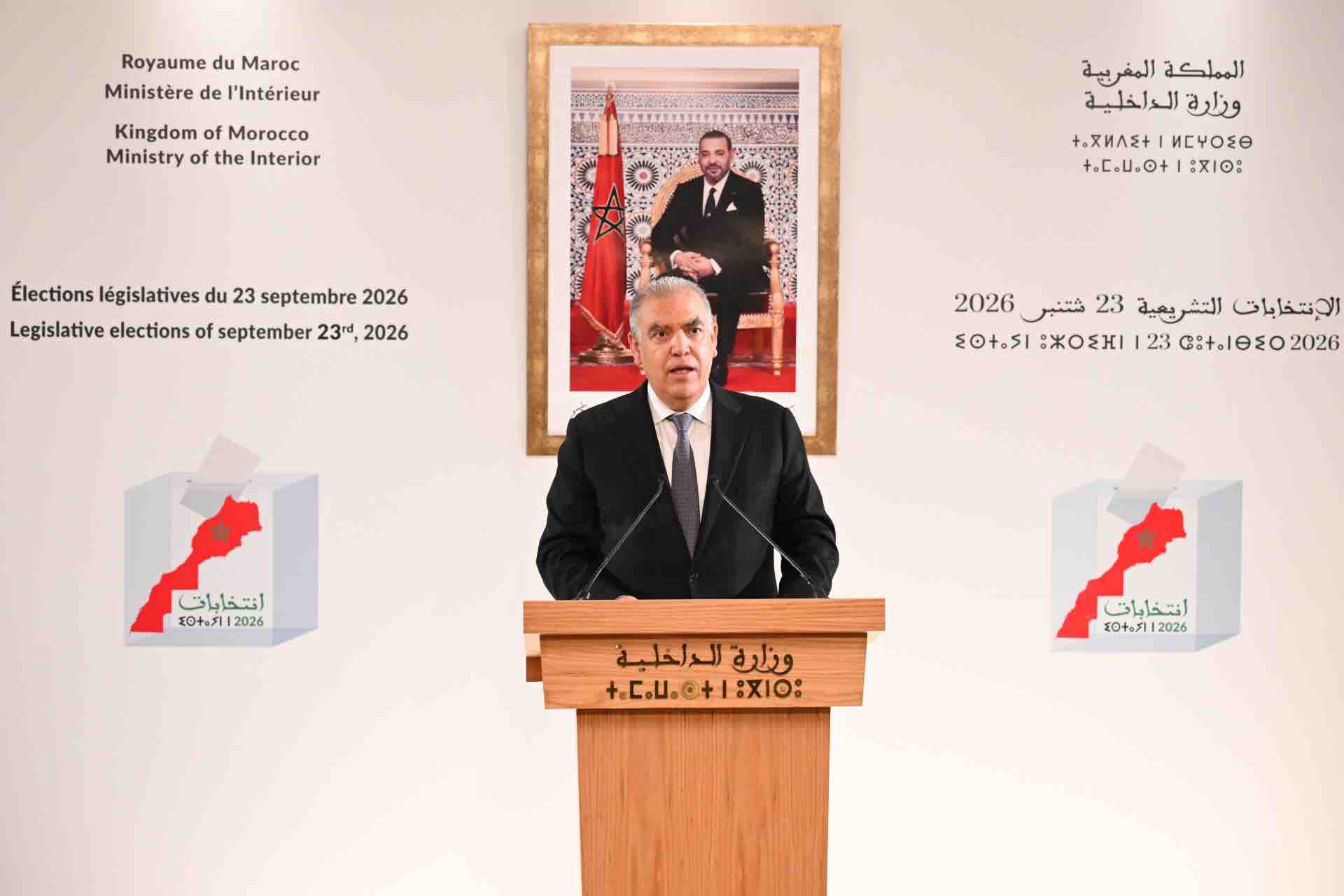
The Authenticity and Modernity Party (PAM) has emerged as the leading political force in Morocco’s September 23 legislative elections, securing 97 seats in the House of Representatives, according to preliminary results announced by Interior Minister Abdelouafi Laftit.
The National Rally of Independents (RNI) follows with 66 seats, while the Istiqlal Party takes 65. The Justice and Development Party (PJD) ranks fourth with 54 seats. The Popular Movement (MP) wins 29 seats, followed by the Socialist Union of Popular Forces (USFP) with 26 and the Party of Progress and Socialism (PPS) with 19.
The remaining seats are distributed among several smaller parties. The Constitutional Union obtains 17 seats, while the Democratic and Social Movement and the Left Alliance each secure eight. The Front of Democratic Forces and the Party of Equity win two seats each. The Party of New Democrats and the Party of Unity and Democracy obtain one seat apiece.
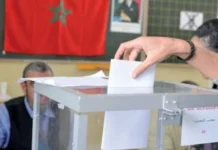
Turnout reached 38.08% nationwide, with nearly six million voters taking part. This compares with 50.86% in the 2021 legislative elections and 42.27% in 2016.
Participation was significantly higher in several southern regions. Laayoune-Sakia El Hamra recorded a turnout of 77%, compared with 61% in Dakhla-Oued Eddahab and 53.48% in Guelmim-Oued Noun.
The election involved an electorate of around 15.8 million people. Authorities established 40,694 polling stations across the country, operated through approximately 3,931 central offices.
Political parties submitted 1,847 candidate lists, with 7,277 candidates competing for seats in the House of Representatives. Women accounted for 2,659 candidacies, representing about 37% of the total.
The campaign also generated substantial political activity. According to the Interior Ministry, parties and candidates organized around 21,000 campaign initiatives involving nearly 1.5 million participants. Field visits represented the most widely used format, followed by campaign rallies.
Authorities reported that voting took place under generally normal conditions, while isolated incidents and complaints were handled through the relevant legal procedures. A total of 3,006 observers monitored the electoral process, including civil society representatives, members of the National Human Rights Council and 200 international observers.
The results announced by the Interior Ministry are preliminary. The new distribution of seats will shape the composition of the House of Representatives and the next phase of Morocco’s institutional process.